What Is a Money Block?
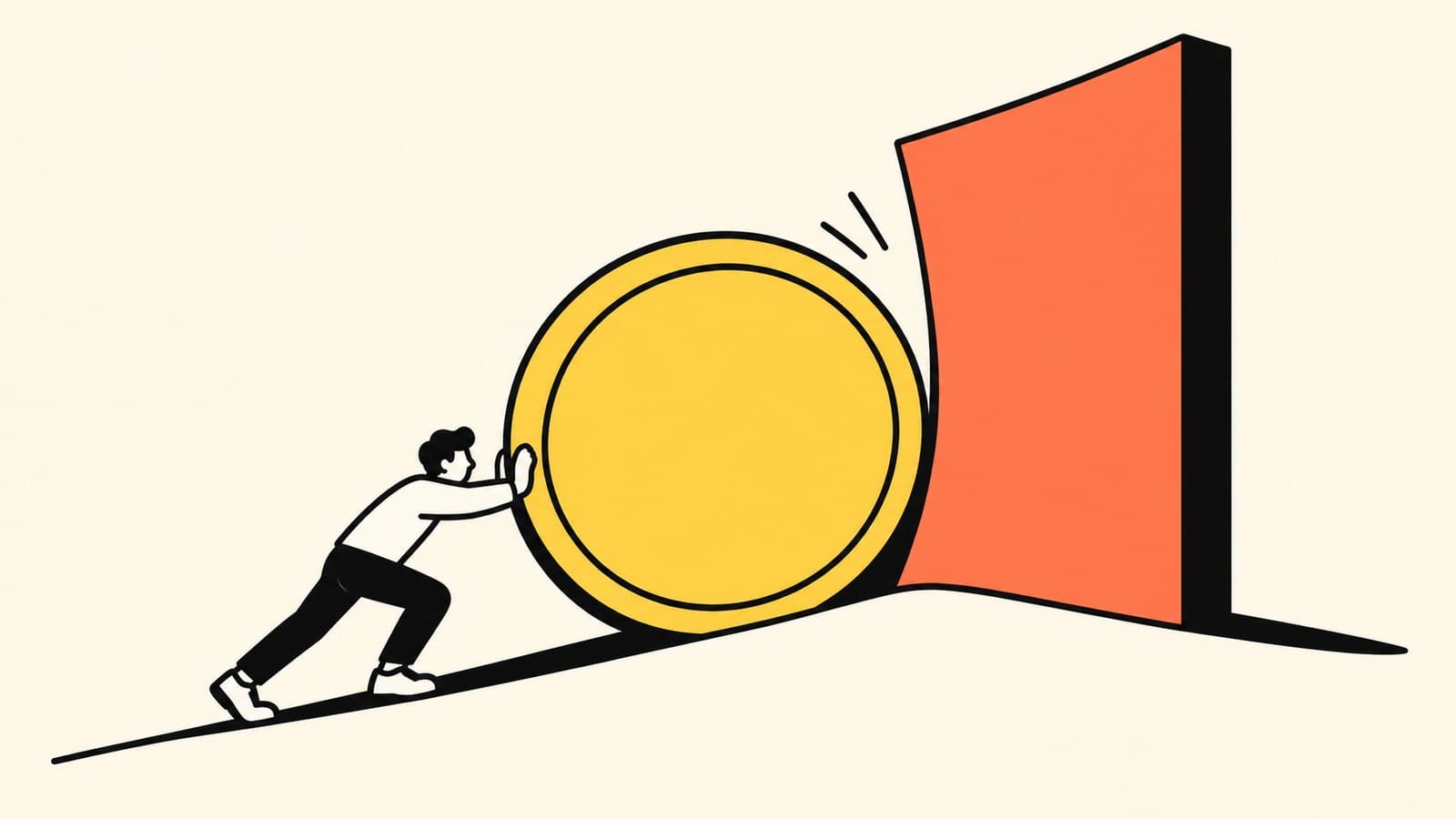
A money block is a belief or an automatic reaction that keeps your income, your prices or your savings at a familiar level, even when your skills and effort would allow more. It is also called a money blockage or a money mindset block.
The important word is automatic. Nobody decides to earn less. A money block works below the level of decisions: it makes certain amounts feel wrong, and then a perfectly reasonable-looking choice follows.
A money block in one example
Say you do freelance design. A new client asks for a quote. You know your fair price is $3,000. As you type it, something tightens, and you send $2,200 instead, with a sentence about being flexible.
Nothing dramatic happened. You did not think "I don't deserve money". You thought "they might say no", "it's a small company", "better to get the job". Each thought sounds sensible. Repeated over years, they add up to an income that stays where it is.
The belief behind the discount is the money block. The discount is only what you can see.
Where money blocks come from
Most money blocks are rules about money learned early and never questioned. Financial psychologists Brad Klontz and Sonya Britt call these rules "money scripts". They describe a few common groups, for example money avoidance (money is bad, rich people are greedy, I don't deserve much) and money vigilance (money must be guarded, spending is dangerous, never talk about it).
These rules usually made sense where they were learned. A child in a family where money caused arguments learns that money is a dangerous topic. A child who was praised for not asking for things learns that wanting is selfish. The rule protected something. As an adult, the same rule quietly shapes what you charge and what you keep.
Common money blocks
The wording differs from person to person, but the same themes come up again and again:
- "Wanting more is greedy." Asking for more money feels like a character flaw.
- "I'd make a mistake and lose it." Larger amounts feel like larger risks, so staying small feels safe.
- "People like us don't have that kind of money." Earning far more feels like leaving your family or friends behind.
- "Money changes people." Having more feels like becoming someone you don't like.
- "I have to earn it the hard way." Money that comes easily feels suspicious and gets spent quickly.
- "If I have more, everyone will want some." More money means more requests, more envy, more pressure.
- "I'm not a money person." Looking at numbers feels like something other people do.
One of these on its own is just a thought. A money block is when one of them reliably shows up at the same point and changes what you do.
Signs you have a money block
- Your income has returned to roughly the same number for several years.
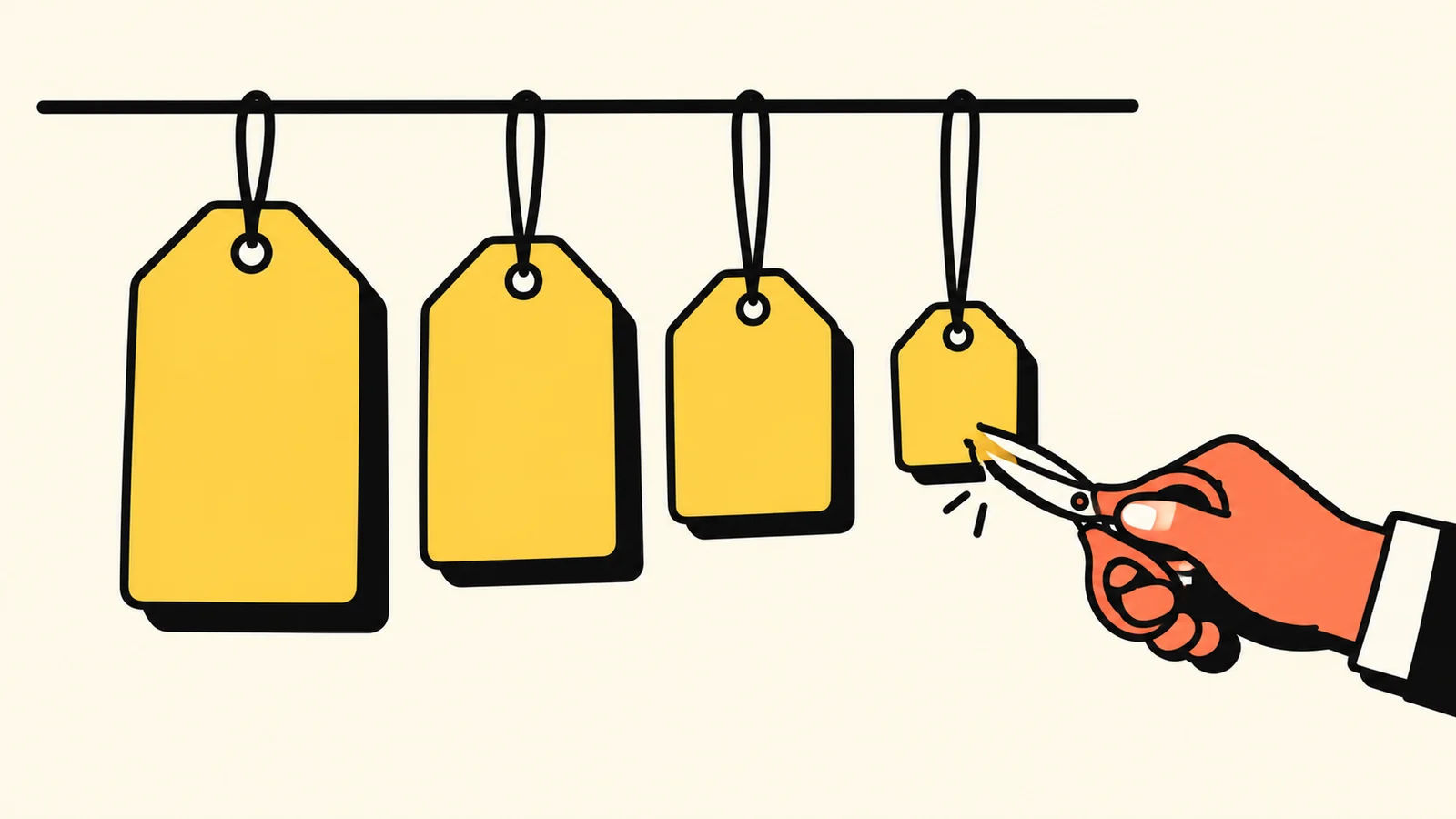
- You lower your price before anyone asks you to.
- Extra money, like a bonus or a big job, is gone within weeks, and you can't say where.
- You put off looking at your accounts.
- Imagining a much larger amount in your account produces a physical reaction: a tight chest, a short laugh, an urge to change the subject.
Several of these repeating over time usually point to a block. Seven everyday signs are described in more detail in money mindset blocks.
Money block and money ceiling: the difference
The two terms describe two sides of one pattern. The money ceiling is the amount: the level where comfort turns into tension. The money block is the belief that makes that amount feel wrong.
Knowing the amount tells you where to look. Knowing the belief tells you what is holding the amount in place. Two people can have the same ceiling for completely different reasons.
How to spot your money block
You can't find a money block by thinking about money in general. Abstract questions get abstract answers. What works is reacting to specific amounts.
- Imagine an amount arriving in your account. It is simply yours. Basic needs are covered, nothing to decide.
- Rate your discomfort from 1 to 10. Use your first reaction.
- Go up step by step: $1,000, $10,000, $50,000, $250,000, $1,000,000.
- Stop at the first amount you rate 4 or higher.
- Write down the first thought that came with it, word for word.
That thought is the best clue you will get to your money block. The free 2-minute money blocks quiz runs this exercise for you and draws the result as a chart. It never asks what you actually earn, save or owe.

Can a money block change?
Often it can, though not by force and not overnight. Affirmations and pep talks tend to bounce off, because the block is not an argument. What tends to help is slower and more specific: see the exact amount and the exact thought, ask what the thought protects you from, and test it with one small real action, writing down beforehand what you expect to happen. Ways to do that are described in removing money blocks.
Nobody can honestly promise that this will raise your income. What it changes is how automatic the old reaction is, and that gives you choices you did not have before.
This article is for self-reflection. It is not financial, legal, tax or professional advice.