Why You Keep Quitting Budget Apps

Most people who have tried to budget have a small graveyard on their phone: two or three budget apps, each opened with good intentions and abandoned within a couple of weeks. The usual conclusion is "I'm just not disciplined enough".
That conclusion is usually wrong. People rarely quit budget apps because they are lazy. They quit because the app asked for too much too early, or because looking at the numbers felt worse than not looking.
Why people quit budget apps
The reasons repeat in reviews and in conversations with people who have tried and stopped:
- Too much setup before any benefit. Connect your bank, build categories, set a goal for every dollar, learn a method. By the time it is ready, the motivation is gone.
- The app punishes you. Red numbers, "over budget" warnings, streaks that break. After a bad week, opening the app feels like getting a grade.
- It doesn't fit irregular income. Many apps assume the same paycheck every two weeks. If your income changes month to month, the plan is wrong from day one.
- "Free" turns out to be a trial. You invest a week of setup, and then the app asks you to pay to keep going.
- The feeling, not the app. You sit down to log, your chest tightens, and you close it. No feature fixes that, and it deserves its own look: why you avoid looking at your money.
The last one matters more than it seems. For many people the problem is not the tool. It is what happens in them when the numbers become visible.
What actually helps you stick with it
The habit that matters most is the smallest one: writing down what you spend. Everything else, like budgets, goals and charts, is built on top of that. If logging is quick and painless, the rest can come later. If it isn't, nothing else gets a chance.
So when you look at budget apps, ask fewer questions about features and more about the first week:
- How fast can you log one expense? Ideally a few seconds: an amount and a word, like "gas 40", without menus.
- Can you start without connecting a bank? Bank sync is convenient for some, but it is also the step where many people stop. Starting manually is often easier.
- Is it free for what you need every day? Logging, categories and seeing your month should not be behind a trial.
- Does it work if your income changes? Look for apps that count the money you actually have, not the money you expect.
- Does it stay calm? No guilt, no streaks, no red alarms on day three.
You don't need the app with the most features. You need the one you will still open on a bad week.
How to start so it sticks this time
Start smaller than feels useful.
- Week one: only log. No budget, no categories to set up, no goals. Just write down every expense as it happens. Missing a day is fine; start again the next day.
- Week two: add your bills. Rent, phone, subscriptions, debts. Now you know what is coming.
- After that: look at the month. With two weeks of real data, a budget is a summary of your life, not a guess.
Each step is easy only because the one before it became normal. People who start with a full budget skip the part that makes it possible.
If you're comparing free budget apps
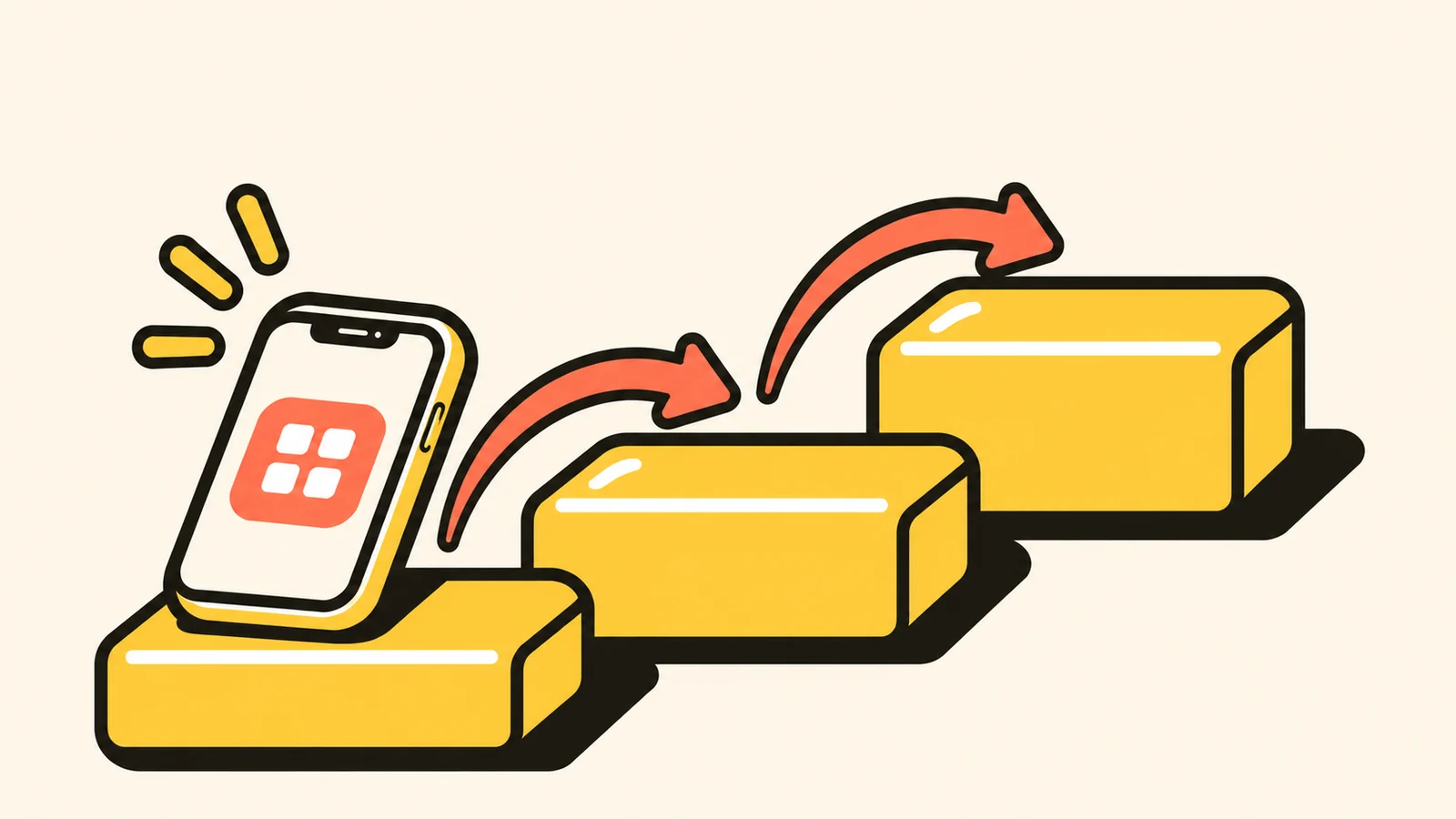
There are many good options, and the right one is the one you will keep using. If you are looking through the best free budget apps, Budget Steps is the one we built for exactly this: a free app where you log your first expense in seconds, with no bank connection and no spreadsheets, that opens the next steps only when the previous one has become a habit. It is made by the same team as Money Ceiling.
When the numbers are hard to look at
If you have quit several apps and each time it ended with the same tight feeling, the app was probably not the problem. That feeling usually starts at a specific amount, and it can be found. The free 2-minute money blocks quiz shows amounts one at a time, you rate how each feels, and it shows where calm turns into tension. It never asks what you earn, spend or owe.
Knowing where the feeling starts doesn't make it disappear. It does make it easier to keep logging anyway, one expense at a time.
This article is for general information. It is not financial, legal, tax or professional advice.