Money Mindset Blocks: 7 Signs You Have One
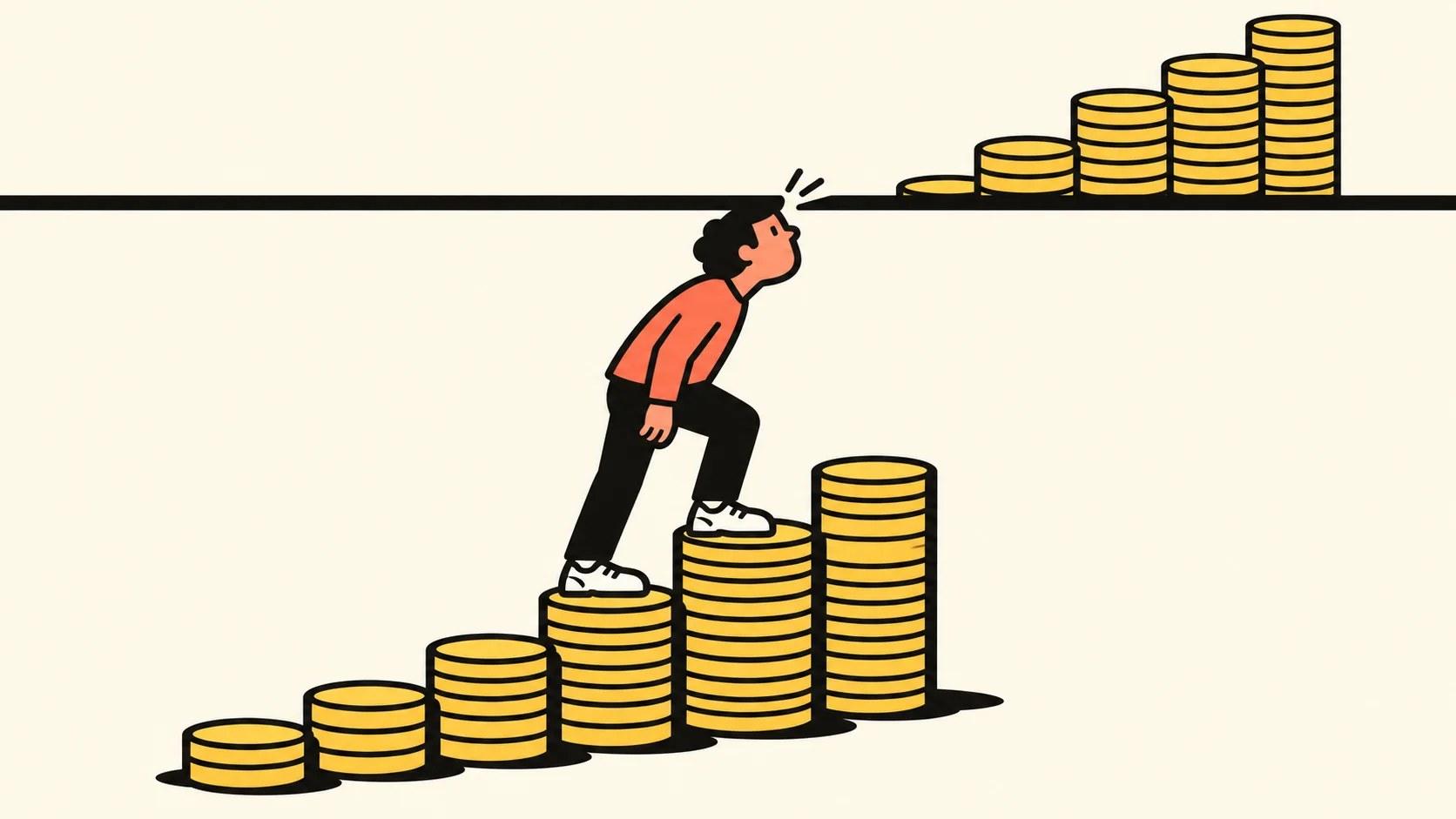
Nobody wakes up thinking “I would like to earn less.” Money mindset blocks do not work that way. They show up as small, reasonable-looking decisions: a price you round down, a raise you postpone asking for, savings that quietly return to the same level every year.
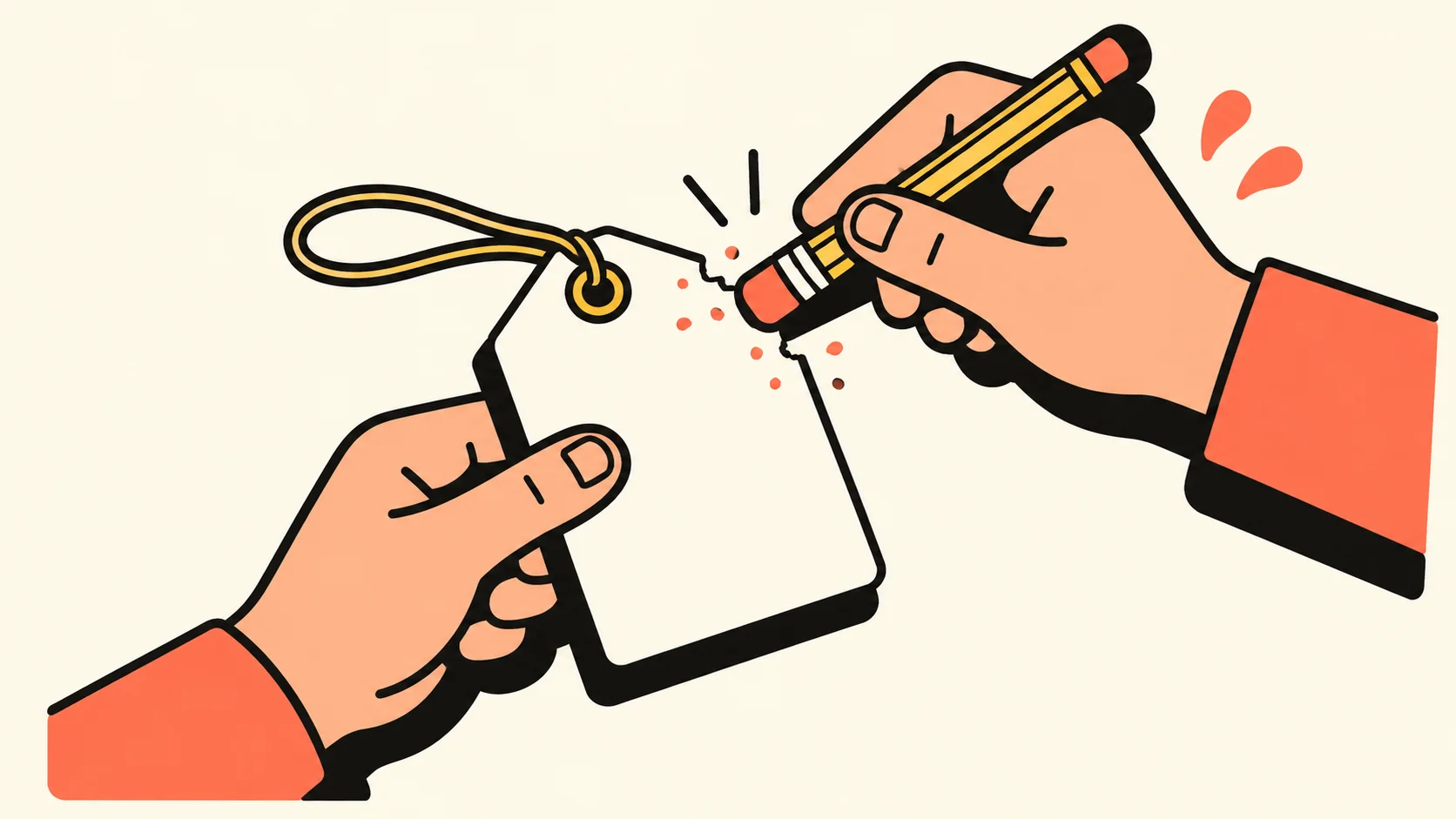
A money mindset block (also called a money block or a money blockage) is a belief or reaction that keeps your income, prices or savings at a familiar level. The belief itself is usually invisible. What you can see is the behaviour around it.
Here are seven signs worth noticing.
Seven signs of a money mindset block
1. Your income has a number it keeps returning to
You have a good month, then an unexpectedly slow one. You get a raise, then your spending rises to meet it. Over several years the figure barely moves. Psychologist Gay Hendricks described this pattern in The Big Leap as an “upper limit”: an inner setting for how much success feels normal, which people unconsciously steer back to.
2. You discount before anyone asks
Say you are a freelance designer and a project is worth $3,000. Before sending the quote you change it to $2,400, “to be safe.” The client never objected. You negotiated against yourself.
3. Naming a price produces a physical reaction
Tight chest, fast speech, an urge to add “but we can discuss it.” The body reacts before the mind has an opinion. This is one of the most reliable signs, because it is hard to argue with.
4. Extra money leaves quickly
A bonus or a large payment arrives, and within weeks it is gone: a loan to a relative, an impulsive purchase, a sudden “necessary” expense. If keeping money feels less comfortable than not having it, getting rid of it restores calm.
5. You feel uneasy when others know what you earn
You play down a good year in front of friends or family. You avoid buying something you can afford because of how it will look. The discomfort here is not about the money but about being seen with it.
6. You have strong opinions about people with money
“Rich people got there by cutting corners.” “Money changes people.” If wanting more means becoming someone you do not respect, part of you will work to prevent it.
7. You know exactly what to do and do not do it
You know you should raise your rates, send the invoice, open the savings account. Weeks pass. When a simple task stays undone for a long time, the obstacle is rarely a lack of information.
One sign on its own means little. Everyone has discounted something once. Three or four of them, repeating over years, usually point to a belief underneath.
Why these blocks are hard to see
A money block feels like common sense from the inside. “I’m just being realistic about the market.” “I don’t need much.” “I’m not a money person.” Each sentence sounds like a fact about the world, when it is a rule you learned, often in childhood, from watching how adults around you handled money.
Researchers Brad Klontz and Sonya Britt call these rules “money scripts”: beliefs about money that are typically formed early, operate outside awareness, and predict financial behaviour. You cannot question a rule you do not know you are following.
There is a second reason. A block usually protects something. Staying below a certain income may protect you from envy, from responsibility for big decisions, or from outgrowing the people you love. As long as the block is doing a job, willpower alone rarely moves it.
How to find which one you have
Signs tell you that something is there. They do not tell you where.
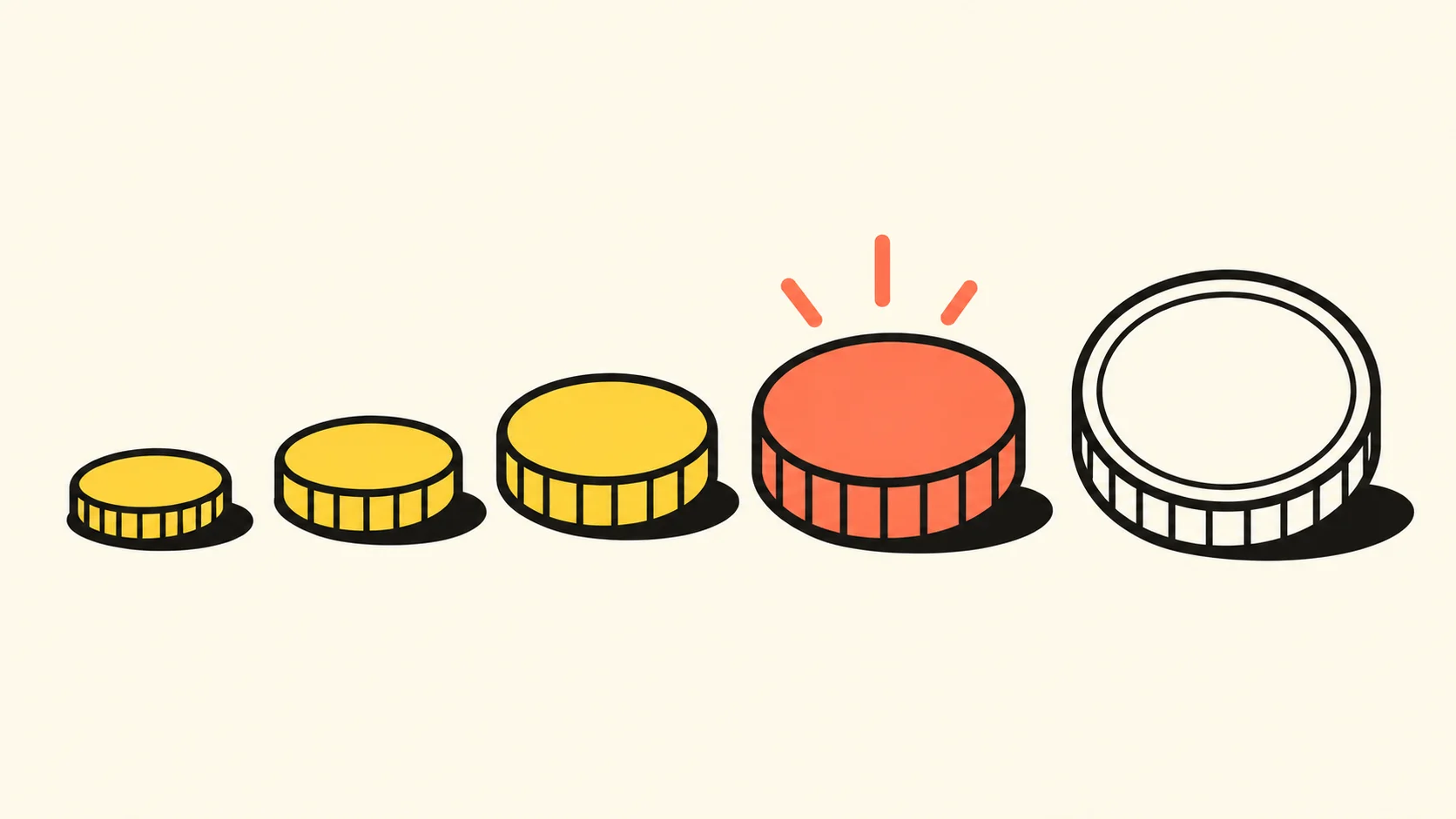
The most direct way to find out is to stop thinking about money in general and look at specific amounts. Imagine $1,000 arriving in your account, free and clear. Then $10,000. Then $50,000. Then $250,000. For most people there is an amount where the feeling changes from “nice” to something tighter: worry, guilt, an urge to give it away.
That amount is your money ceiling, and the first thought that comes with it points to the kind of block behind it. “I’d have to manage it and I’d mess up” is a different block from “my sister would resent me.”
You can do this on paper, or you can use the free 2-minute money blocks quiz. It shows amounts one at a time, you rate your discomfort from 1 to 10, and it stops at the first amount where your reaction changes. It asks nothing about your real income, savings or debts.
What to do once you see it
Do not try to remove it by force. Start by being precise:
- Write down the amount where the feeling changed.
- Write down the first thought exactly as it came, even if it sounds childish.
- Ask what the thought protects you from. Envy? Mistakes? Losing touch with someone?
A block that has been named in your own words is already less automatic. From there you can test it with one small real-life experiment, which is what the full session with the AI coach is built around.
This article is for self-reflection. It is not financial, legal, tax or psychological advice.