Money Comes In and Goes Right Out: Why It Happens
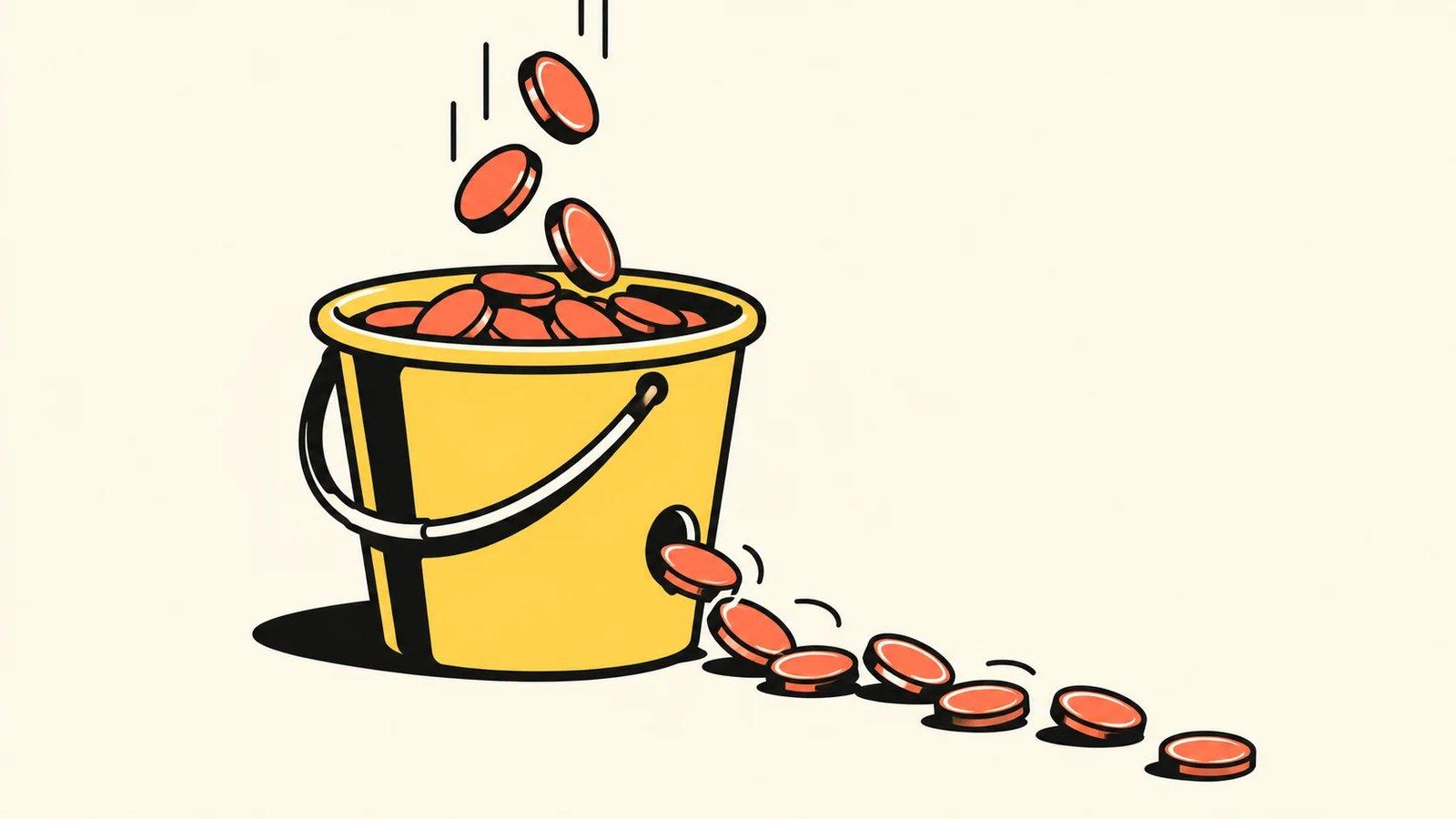
Some people can earn money and cannot keep it. The payment lands, and within a week or two it is gone: bills, a debt, something for the house, a few things that seemed necessary. Ask where it went and there is no clear answer.
The standard explanation is poor budgeting. Sometimes that is all it is. But many people in this situation have tried budgets, more than once, and the pattern survived every one of them. That is a sign the cause sits somewhere else.
Two different problems that look the same
A numbers problem. Your costs are higher than your income, or close to it. No change in attitude fixes that. It needs practical steps, and sometimes a qualified adviser.
A reaction problem. There is enough coming in, at least in some months, and it still does not stay. Extra money in particular leaves fast. This article is about the second one.
A quick way to tell them apart: think about the last time you received more than usual. A bonus, a big job, a refund. If it was gone as quickly as an ordinary month's income, and you could not say on what, the reaction is worth a look.
Why keeping money can feel worse than spending it
This sounds backwards, so take it slowly.
Money that stays in your account asks things of you. You have to decide what it is for. You might decide wrongly. Someone may ask you for some of it, and you will have to answer. It may make you visible in a way you are not used to.
Money that has been spent asks nothing. The decision is over. For a moment there is relief.
So for some people spending is not about wanting the thing. It is about ending the tension of holding. The purchase, the loan to a relative, the early debt payment are all ways of getting back to a level that feels normal. Psychologist Gay Hendricks called this kind of inner setting an "upper limit": a level of having that feels like you, which you steer back to without noticing.
The feeling that drives it is usually physical and brief. A tightness, a restlessness, a sense that something needs to be done with this money now. It passes when the money does.
Why you cannot say where it went
Not knowing is part of the pattern, not a separate failing.
If you looked closely at where the money goes, you would see the pattern, and then you would have to do something about it. Staying vague is easier. So the same reaction that moves the money out also discourages you from watching it leave. People describe sitting down to go through their spending, feeling their chest tighten, and closing the app.
This is why "just track your expenses" so often fails here. It asks you to do the exact thing the reaction exists to prevent.
Why income stays at one number
The same setting works in the other direction.
Say you are a self-employed tradesperson. Over five years you have become faster and better, and you work as much as ever. Your yearly income has barely changed. Looking back you can find the moments: a price you did not raise, a larger job you did not quote for, a slow month that followed a very good one.
Each choice had a sensible reason at the time. Together they keep the total inside a familiar range. Leaking money and a flat income can be two views of one thing: an amount above which having money stops feeling comfortable.
This is one possible explanation, not the only one. Prices in your trade, your health, your family's needs and plain luck matter as much. It is worth checking because it is the part that is yours to look at.

Where to look first
You do not need to fix the whole picture. You need one precise observation.
- Find the amount where the feeling changes. Imagine $1,000 arriving, free and clear. Then $10,000, $50,000, $250,000. Notice where "nice" turns into something tighter. The free 2-minute money blocks quiz does this for you and never asks about your real income.
- Catch the first thought at that amount. "I'd waste it." "They'd all want some." "I wouldn't know what to do." Write it as it came.
- Next time extra money arrives, wait before moving it. Not forever. Pick a short period you can manage, even three days, and write down beforehand what you expect to feel. Then compare.
The third step is small on purpose. You are not trying to save. You are finding out what holding money feels like, and whether the feeling is as bad as you predicted.
If you also want to see where the money goes without a spreadsheet, a simple free budget app we built for exactly this can help: one line per expense, no bank connection.
What changes and what does not
Seeing the pattern does not raise your income or fill your account, and nobody honest will promise that it does. What it changes is the automatic part. The urge to move the money still appears, and you notice it as an urge and not as a necessity. That gives you a choice you did not have before.
If you want help putting your own pattern into words, the full Money Ceiling session takes the amount you found, looks at it from several sides with an AI coach, and ends with a written map and one experiment to try.
This article is for self-reflection. It is not financial, legal, tax or psychological advice. If your costs regularly exceed your income or you are struggling with debt, a qualified financial adviser or a non-profit credit counselling service can help with the practical side.